Early Life & Military Service
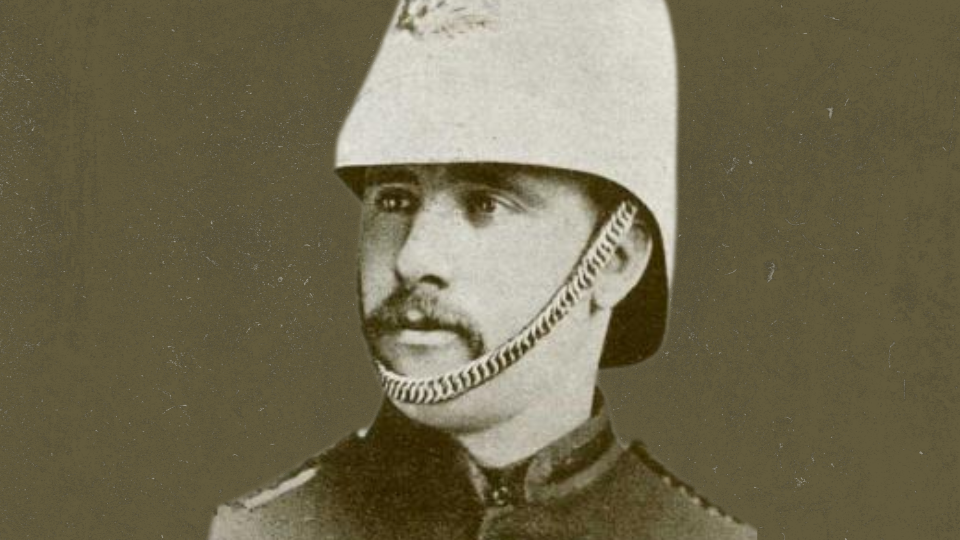
Frederick Corbett was born as David Embleton in Maldon, Essex, in September 1853. According to the Census, in 1871 he was an 18-year-old tin worker living with his family. His early military service is uncertain: he may have served during the Zulu War of 1879 and the First Boer War of 1881, although this cannot be confirmed.
What is certain is that he arrived in Egypt with the 3rd Battalion, The King’s Royal Rifle Corps, in July 1882, serving with the Mounted Infantry.
On 5th August 1882, during the fighting at Kafr Dowar, Corbett displayed exceptional bravery. Acting as orderly to Major H. H. Parr, commander of the Mounted Infantry, he remained beside the mortally wounded Lieutenant Howard Vyse, tending to him under fire. When finally ordered to withdraw, Corbett helped carry Lieutenant Vyse from the battlefield.
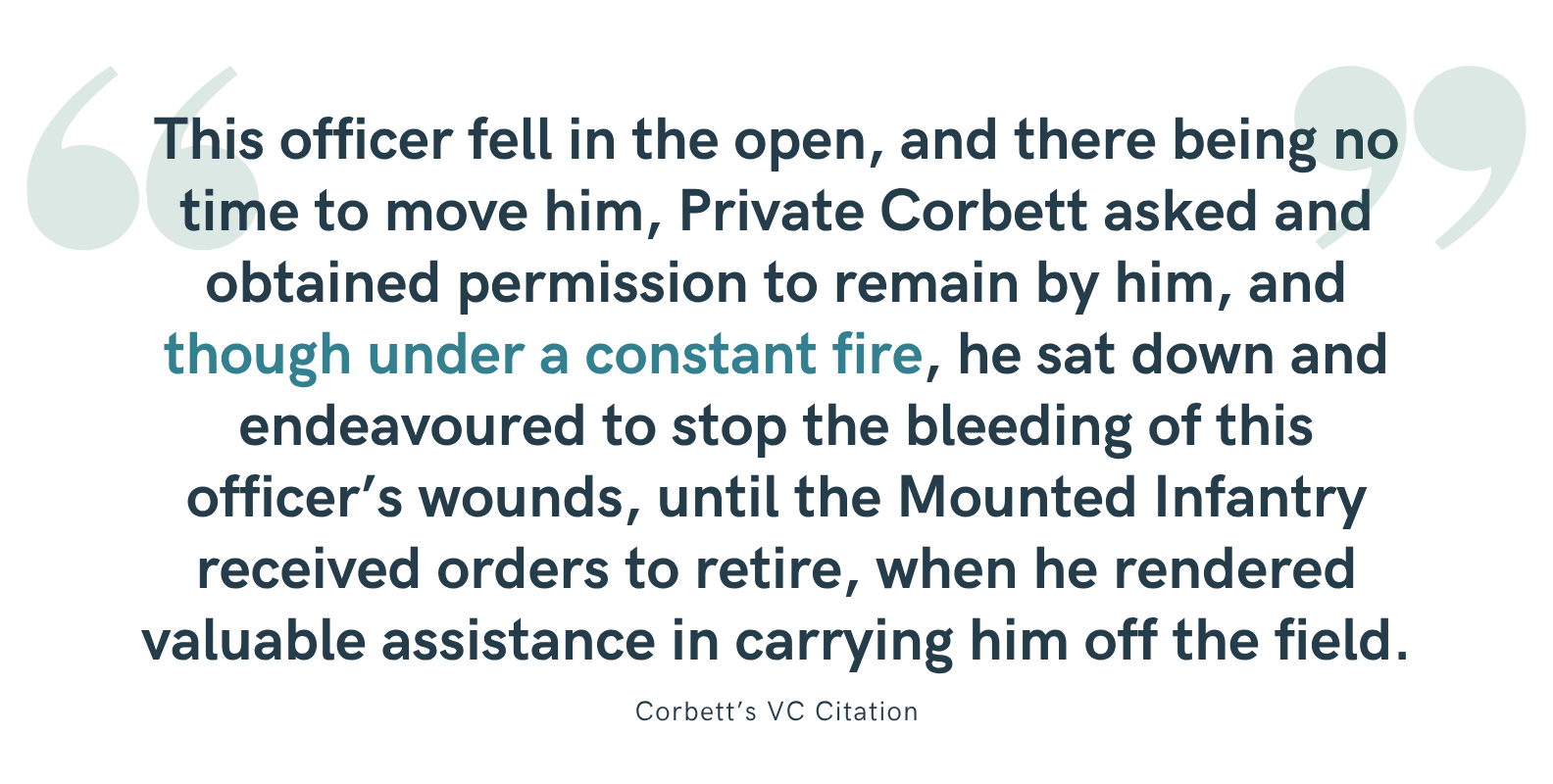
Major Parr recommended him for the Distinguished Conduct Medal, but the Commander-in-Chief, Sir Garnet Wolseley, considered his actions worthy of the Victoria Cross.
Later that year, encouraged by Major Parr, Corbett transferred to the Military Police, was promoted to corporal, but was discharged as medically unfit in June 1883.
A Troubled Later Life & Death
After returning to England, Corbett sold his Victoria Cross for 15 guineas before re-enlisting in the Army as a driver in the Royal Horse Artillery. He returned to Egypt in 1884 but, after coming back to Britain, went absent without leave and was later tried by court martial for that offence, as well as theft and embezzlement from an officer.
Convicted on all charges, he was sentenced to 28 days’ imprisonment with hard labour. His name was removed from the register of Victoria Cross recipients and his annual VC annuity of £10 was forfeited.
Posted to India after his release, Corbett continued to accumulate disciplinary offences, including striking a non-commissioned officer and replacing his lost kit with that of another soldier. Following a second medical discharge in 1891, he received no military pension and struggled for the remainder of his life.
Living once again under his birth name, David Embleton, he died destitute in Maldon Workhouse Infirmary on 25 September 1912 and was buried in a pauper’s grave. In 2004, a regimental headstone was erected to mark his grave.
The Story of the Victoria Cross
Corbett’s Victoria Cross has a remarkable history of its own. During and after his lifetime, several copies were known to be in circulation, creating uncertainty over the whereabouts of the original medal.
By 1903, the genuine Victoria Cross was in the possession of Mr Mansfield, Clerk to Kingsbury Urban District Council. Hoping to return it, he contacted the War Office to ask whether it should be given back to Corbett or his family. The War Office replied that, as Corbett’s name had been erased from the register of Victoria Cross recipients, it should not be returned to him or his representatives.
Mr Mansfield was instead informed that, because Corbett had sold the medal while he was no longer subject to the Army Act, he was legally entitled to retain it.
Later, King George V stated that ‘even were a VC to be sentenced to be hanged for murder, he should be allowed toe wear his VC on the scaffold’. Although Corbett’s name was never formally reinstated, it has been restored to the roll of recipients.